

Data Sovereignty in Sports: Closing the Gap Between Clubs and Platforms
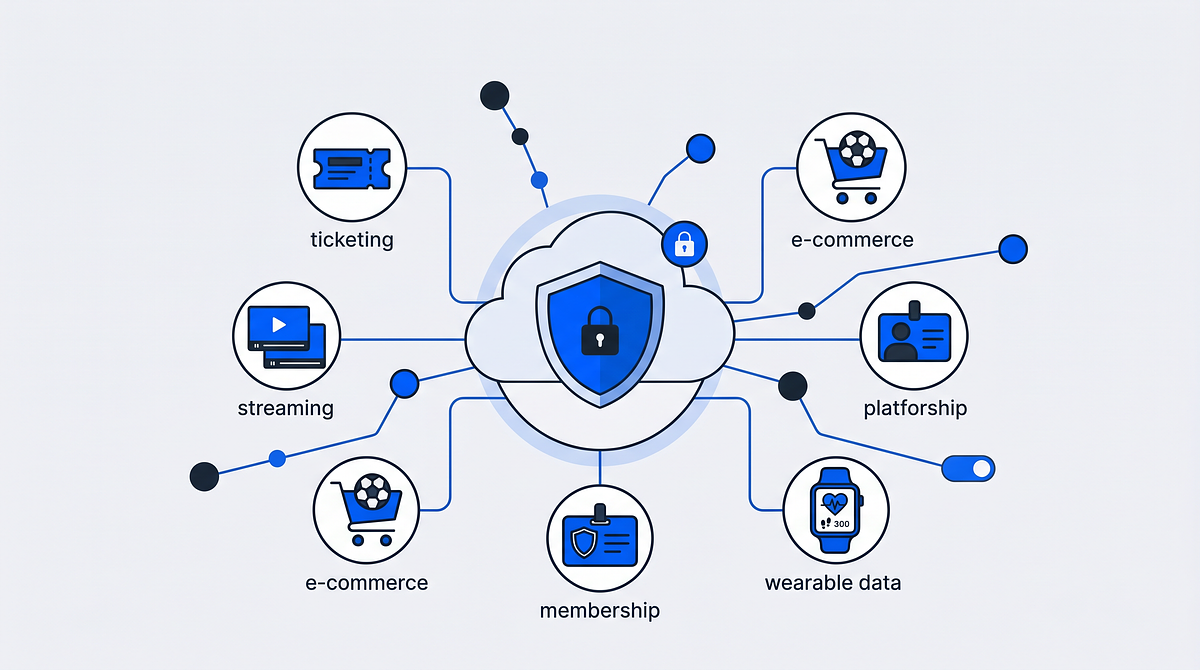
Sports clubs generate fan data across ticketing, streaming, merchandise, and membership platforms every day. The problem is that most of this data stays with the platforms, not the club.
Data sovereignty is the authority to decide how that information is collected, stored, and used. This article explains where clubs lose control, how GDPR shapes the rules, and what it takes to close the gap between your club and the platforms that hold your fan data.
What is data sovereignty in sports
Data sovereignty in sports refers to an organization's authority over its digital assets. For sports clubs, this means retaining complete ownership, control, and legal compliance over fan information, member records, and athlete performance data. The concept covers both individual rights (an athlete's control over biometric data) and organizational control (a club's ability to access and use fan data for marketing and revenue).
Here is the core distinction: data sovereignty is not just about where data is stored. It is about who can access it, who can export it, and who decides how it gets used.
When a club depends on external ticketing systems, streaming platforms, or e-commerce tools, the question of control becomes critical. If a vendor holds the data and sets the terms, the club has limited sovereignty, even if the data originated from the club's own fans.
Who owns fan, member, and athlete data
Ownership is often unclear because data is scattered across vendors, platforms, and internal systems. Disconnected data silos limit visibility and make it difficult to build a complete picture of any individual fan or member.
Club-owned data
Club-owned data is information collected directly through owned channels: membership forms, club apps, direct email sign-ups, and on-site registrations. Clubs have full control over this data and can use it for marketing, personalization, and monetization without restrictions from third parties.
The key advantage here is portability. If a club owns the data, it can move that data to a new system, combine it with other sources, or use it for campaigns without asking permission.
Platform-held data
When fans buy tickets through an external provider or watch content on a third-party streaming service, the platform typically captures the data. Clubs often cannot access raw records. Instead, they receive aggregated reports after the fact.
This creates contractual lock-in risks. If a club wants to switch ticketing providers, for example, the historical purchase data may stay with the old vendor. The club loses continuity and context.
Athlete-generated performance data
Wearables, GPS trackers, and health sensors generate special category data under GDPR. This includes heart rate, location, and biometric information. Clubs may collect this data, but athletes retain rights over it.
There is often legal ambiguity around who controls the analytics derived from performance data, especially when third-party technology providers are involved. A club might use a vendor's wearable devices, but the vendor's terms may grant it rights to aggregate or anonymize the data for its own purposes.
Where sports clubs lose data sovereignty today
The gap between clubs and platforms emerges whenever a club relies on external systems and gives up visibility into customer behavior. Here are the most common areas where this happens.
Ticketing and box office platforms
External ticketing providers often retain purchase behavior, demand signals, and contact details. Clubs typically receive only post-sale reports rather than real-time or pre-purchase intent data.
This means the club cannot see which fans browsed but did not buy, or which sections generated the most interest before selling out. The platform sees demand signals. The club sees only completed transactions.
Streaming and OTT providers
When clubs distribute content through third-party streaming services, they often lose insight into who watches, when they watch, and how often. Detailed viewership data stays with the platform.
Without individual-level data, clubs cannot identify their most engaged fans or personalize follow-up offers based on viewing behavior.
Shop, merchandise, and loyalty tools
Third-party e-commerce systems hold transaction history and browsing behavior. Without integration, clubs cannot connect a merchandise buyer to a season ticket holder or broader member profile.
The result is fragmented data. A fan who buys a jersey online and attends matches in person may appear as two separate people in the club's systems.
Social media and big tech reach
Clubs build audiences on platforms they do not own. Algorithm changes or policy shifts can reduce reach overnight, while fan identity data remains with the platform rather than the club.
A follower on Instagram is not the same as a contact in your CRM. The club cannot email that follower directly, cannot see their purchase history, and cannot control how often they see club content.
| Touchpoint | Who holds the data | What clubs typically receive |
|---|---|---|
| Ticketing platform | Vendor | Aggregated sales reports |
| Streaming/OTT | Vendor | Viewer counts, no individual IDs |
| E-commerce/shop | Vendor | Order confirmations |
| Social media | Platform | Follower metrics, no contact data |
How GDPR shapes sports data sovereignty in the EU
GDPR defines the legal framework for sports data sovereignty in the EU. It establishes the rules for lawful data processing, consent requirements, data subject rights, and the distinction between controller and processor.
- Lawful basis: Clubs require a valid reason such as consent, contract, or legitimate interest to process personal data
- Data subject rights: Fans and members can request access, correction, or deletion of their data at any time
- Controller vs. processor: The club is the controller and bears responsibility for compliance, with cumulative GDPR fines exceeding €7.1 billion across the EU. Vendors processing data on the club's behalf are processors and act under the club's instructions
GDPR also introduces two important data categories:
- Zero-party data: Information users voluntarily and proactively share, such as preferences or survey responses
- First-party data: Information collected through direct club interactions, such as purchases, logins, and app usage
When clubs collect data directly and transparently, they reduce reliance on third-party cookies and inferred behavior. EU-hosted infrastructure serves as a baseline for compliance, though hosting alone does not guarantee sovereignty. Contractual control and data portability matter just as much.
Why data sovereignty is a commercial decision for sports clubs
Data sovereignty is not only a compliance issue. It is a revenue and growth decision, with Morgan Stanley estimating the sports industry could unlock $130 billion annually by closing its digital gap.
Clubs that control their data can run targeted campaigns, build premium memberships, and reduce dependence on advertising intermediaries. Clubs that do not control their data pay platform fees to reach their own fans.
- Direct monetization: Offer premium memberships, exclusive content, and personalized merchandise based on unified profiles
- Lower customer acquisition costs: Retarget fans through owned channels instead of paying platform fees
- Partner and sponsorship value: First-party audience data increases sponsorship inventory value because sponsors can reach verified, engaged fans
- Reduced vendor lock-in: Switching providers is easier when the club retains all user records independently
The commercial case is straightforward. If you do not own your fan data, you cannot activate it without paying someone else for access.
How sports clubs close the gap with platforms
Clubs can close the gap by centralizing identity and consent under a club-owned layer that sits above individual vendors. Single Sign-On (SSO) is the technical mechanism that enables this approach.
A central identity layer can synchronize data across CRM, ticketing, shop, and app systems, creating a unified view of each fan. Instead of each vendor holding a separate fragment, the club maintains the complete profile.
- Central identity layer: One login across all club digital services such as app, shop, ticketing, and streaming
- Consent cockpit: Users manage their own data and opt-ins in one branded interface
- Data synchronization: Real-time sync between the identity layer and connected systems such as CRM, CDP, and iPaaS
- Standards compliance: OpenID Connect (OIDC) and SAML ensure interoperability with existing tools
This approach does not require replacing existing vendors. Instead, the identity layer becomes the connective tissue that links systems together and keeps the club in control of the unified profile.
Best practices for fan and member data sovereignty
- Own the login: Route all fan and member authentication through a club-controlled SSO rather than third-party social logins
- Centralize consent: Use a transparent consent cockpit so users understand what they share and can update preferences
- Audit vendor contracts: Review data access, export, and portability clauses before renewing platform agreements
- Host in the EU: Ensure user data is stored and processed within EU jurisdiction for GDPR compliance
- Collect zero-party data: Ask fans directly for preferences instead of relying only on inferred behavior
- Integrate continuously: Connect ticketing, shop, CRM, and app data to a central identity hub to build unified profiles
How to implement a sovereign identity layer for your club
1. Audit existing data silos and vendor contracts
Start by mapping where fan and member data currently lives — only 34% of organizations have complete knowledge of where their data is stored, according to the Thales 2026 Data Threat Report. Identify which vendors allow data export and which retain ownership. This audit reveals the gaps and informs integration priorities.
2. Centralize login with Single Sign-On
Deploy an SSO solution that supports OpenID Connect and SAML. Replace fragmented logins across ticketing, shop, and app with one branded login. This creates a single user ID that can be recognized across all touchpoints.
3. Configure consent and zero-party data collection
Set up a consent cockpit where users control their data. Add preference fields and surveys to grow zero-party data. Transparent consent management builds trust and ensures GDPR compliance.
4. Integrate CRM, shop, ticketing, and app systems
Use APIs, webhooks, or pre-built integrations to synchronize user data into a central profile. Identity management platforms often offer ready-to-go connectors that reduce implementation effort.
5. Activate sovereign data for memberships and campaigns
Once profiles are unified, run ID-based campaigns, launch premium membership tiers, and personalize offers across all touchpoints. The data you own becomes the foundation for revenue growth.
Turning fan data ownership into long-term club growth
Data sovereignty is the foundation for sustainable digital revenue, stronger fan relationships, and greater independence from platform intermediaries. Clubs that own their identity layer can adapt faster, switch vendors without losing data, and build direct relationships with fans.
A ready-to-go identity management platform can accelerate this transition without requiring custom infrastructure. The goal is not to replace every vendor, but to ensure the club remains the central point of control for fan and member data.
Frequently asked questions about data sovereignty for sports clubs
What is the difference between data sovereignty and data protection?
Data protection refers to the legal and technical measures that safeguard personal data from misuse, such as encryption and access controls. Data sovereignty is about who has the authority to control and access that data in the first place. You can have strong data protection while still lacking sovereignty if a vendor controls the data on your behalf.
Does EU hosting alone guarantee data sovereignty for a sports club?
No. EU hosting addresses data residency requirements under GDPR, but true sovereignty also requires contractual control, data portability, and the ability to access and use data independently of third-party vendors. Hosting is a necessary condition, not a sufficient one.
How is athlete data sovereignty different from fan data sovereignty?
Athlete data often includes special category information such as health and biometric data, which carries stricter GDPR requirements. There are also additional questions about individual consent and contractual obligations between player and club. Fan data is typically less sensitive but involves larger volumes and more touchpoints.
Can smaller clubs afford a data sovereignty infrastructure?
Yes. Ready-to-go identity management platforms offer pre-built integrations and configurable consent tools, reducing the need for custom development or large IT teams. The cost of not owning your data, in lost revenue and vendor lock-in, often exceeds the cost of implementation.
What happens to existing fan data when a club switches ticketing or shop providers?
The outcome depends on the original vendor contract. Clubs that negotiate data export and portability clauses upfront can retain their records. Alternatively, a central identity layer that retains user profiles independently of any single vendor ensures continuity regardless of which systems are connected.
How Sports Organizations Use CIAM
A fan buys a season ticket, downloads the club app, and orders a jersey online—yet the club sees three strangers instead of one loyal supporter. This fragmentation costs sports organizations revenue, personalization opportunities, and the unified fan relationships that drive long-term growth.
Digital Membership Cards Made Simple with Unidy
A digital membership card is a smartphone-based credential that replaces traditional plastic cards, stored in Apple Wallet or Google Wallet and scanned via QR code or NFC for instant access to member benefits.