

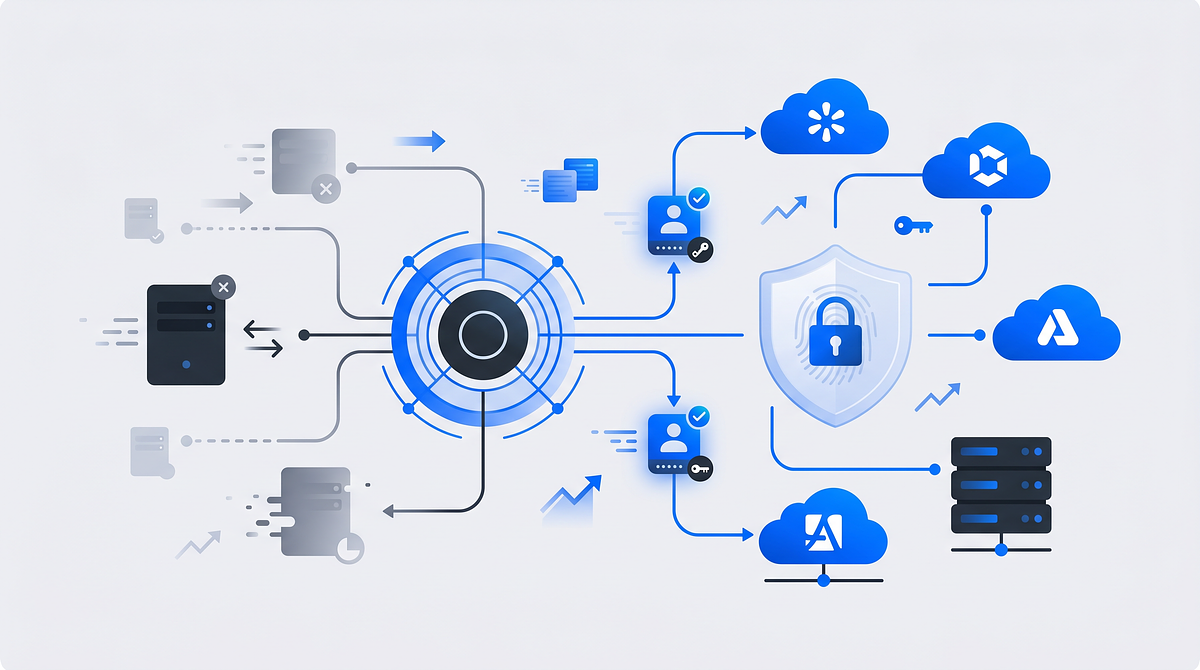
Keycloak handles authentication well, but running it means owning every upgrade, every security patch, and every integration yourself. For teams without dedicated identity engineers, that operational weight eventually becomes a drag on product velocity.
This guide compares the top Keycloak alternatives for 2026, covering open-source self-hosted options, managed SaaS platforms, and CIAM solutions with built-in consent management. You will also find a practical framework for choosing the right fit and a step-by-step approach to migration.
What is Keycloak and how does it work
If you are moving away from Keycloak, the best alternatives depend on whether you want an open-source self-hosted system, a developer-first platform, or an enterprise SaaS solution. Keycloak is an open-source Identity and Access Management (IAM) solution originally developed by Red Hat. It provides Single Sign-On (SSO), supports OpenID Connect (OIDC) and SAML protocols, and runs on your own infrastructure.
Organizations use Keycloak to centralize user authentication across multiple applications. Once a user logs in through Keycloak, they can access connected services without entering credentials again. While this gives teams full control, it also means taking on the work of running and maintaining the system.
Reasons to switch from Keycloak
Keycloak is a capable identity platform. Yet organizations often reach a point where its limitations outweigh its benefits. The following pain points frequently drive teams to explore alternatives.
High operational and maintenance overhead
Running Keycloak requires dedicated Java expertise and DevOps resources for deployment, upgrades, and scaling. Every major version upgrade can introduce breaking changes, and your team is responsible for patching security vulnerabilities. For organizations without a dedicated identity engineering function, this overhead becomes a distraction from core product work — particularly as 88% of organizations have experienced significant cybersecurity events due to skills shortages.
Limited commercial support and roadmap uncertainty
Keycloak lacks an official commercial support tier. Organizations relying on community forums and GitHub issues face uncertainty around response times, especially for production-critical bugs. The long-term roadmap depends on community contributions rather than a dedicated product team with service-level agreements.
Outdated user experience and admin UI
The Keycloak admin console, though functional, feels dated compared to modern identity platforms. Onboarding new team members takes longer, and common tasks like configuring authentication flows often require navigating multiple screens.
Weak customer identity and consent features
Keycloak was designed primarily for workforce IAM, meaning employee access to internal applications. It lacks native support for Customer Identity and Access Management (CIAM) features such as branded user accounts, transparent consent management, and zero-party data collection. Zero-party data refers to information users intentionally share with you, like preferences or consent choices. If you are building consumer-facing experiences, you will likely need additional tools.
Complex integration with marketing and data stacks
Connecting Keycloak to CRMs, Customer Data Platforms (CDPs), and marketing automation tools typically requires custom development. Unlike platforms with pre-built integrations and webhooks, Keycloak expects you to build and maintain connections yourself.
What to look for in a Keycloak alternative
Before evaluating specific platforms, it helps to define the criteria that matter most for your use case.
OpenID Connect and SAML protocol support
Any serious alternative supports OIDC and SAML for standards-based SSO. If you are connecting multiple identity sources or federating with external partners, confirm the platform handles federation without extensive customization.
Hosting model and EU data residency
Some teams prefer self-hosted deployments for maximum control. Others want a fully managed SaaS to reduce operational burden. For organizations subject to GDPR, EU-hosted infrastructure is often a requirement rather than a preference.
Developer experience and User API
Strong API documentation, available SDKs, and flexible webhook support reduce implementation time. A platform with poor developer experience slows down your team and increases the risk of integration errors.
Customer identity and consent management
For B2C or B2B2C use cases, look for branded user accounts, transparent consent flows, and the ability to collect zero-party data. Consent management features are essential for building trust and staying compliant with privacy regulations, especially as consumer privacy concern has risen from 60% to 70% in a single year.
Total cost of ownership
Consider not just licensing fees but also infrastructure, maintenance, and internal DevOps effort. A managed service with higher monthly fees may still cost less than running your own Keycloak cluster when you factor in engineering time.
Keycloak alternatives at a glance
The table below summarizes the top alternatives based on deployment model and primary use case.
| Alternative | Type | Best used for | Key advantage |
|---|---|---|---|
| Unidy | Managed SaaS | Media, sports, membership orgs needing CIAM + consent | Branded user accounts with GDPR-native consent and 100+ integrations |
| Auth0 | Managed SaaS | Teams wanting fully managed auth | Out-of-the-box social login and MFA |
| Okta | Managed SaaS | Enterprise-wide workforce and customer IAM | Extensive ecosystem integration |
| FusionAuth | Open-source core / Paid | Developer-controlled, high-scale apps | Strong API docs, no user limits |
| Zitadel | Open-source / Self-hosted | B2B SaaS, multi-tenant systems | Native multi-tenancy, event-sourced |
| Authentik | Open-source / Self-hosted | Custom auth flows, homelabs | Visual drag-and-drop flow editor |
Best Keycloak alternatives for identity and access management
This section reviews each alternative in detail, covering what it does, key capabilities, and the ideal use case.
Unidy
Unidy is a ready-to-go identity management and SSO platform that combines CIAM features with deep integrability. Unlike Keycloak, it was designed from the start for customer-facing scenarios where consent management and data ownership matter.
Key capabilities include:
- Branded user account: Configurable data fields, login methods, and user groups that match your brand
- Consent management: Transparent opt-ins with personalized consent screens and a user-facing data cockpit
- Integrations: 100+ pre-built connectors, unlimited API calls, and webhooks for CRMs, CDPs, and marketing tools
- Monetization: Support for premium memberships, ID-based campaigns, and partner integrations
Unidy is EU-hosted and GDPR-first, making it a fit for media brands, sports clubs, and membership organizations seeking to unify logins while growing their own zero-party and first-party data.
Auth0
Auth0 is a managed identity platform, now part of Okta, offering social login, multi-factor authentication (MFA), and passwordless options out of the box. Its per-monthly-active-user pricing model makes costs predictable, though they can grow quickly at scale.
Auth0 works well for teams lacking dedicated DevOps resources for auth infrastructure. The trade-off is less flexibility compared to self-hosted options.
Okta
Okta is an enterprise-grade workforce and customer identity platform with extensive ecosystem integrations. It supports advanced governance features like lifecycle management and access certification.
Large enterprises with complex hybrid identity environments, including on-premises Active Directory and cloud applications, often choose Okta for its breadth of capabilities.
Microsoft Entra External ID
Microsoft Entra External ID (formerly Azure AD B2C) is Microsoft's CIAM offering. It integrates tightly with the Microsoft ecosystem, including Azure and Microsoft 365. Organizations already invested in Microsoft infrastructure find Entra External ID a natural extension of their existing identity setup.
Ping Identity
Ping Identity is an enterprise identity platform supporting hybrid and legacy environments. It excels at federation and access management for organizations with a mix of on-premises and cloud identity needs. Ping is often chosen by large enterprises with complex legacy systems that require gradual modernization.
FusionAuth
FusionAuth is a developer-centric identity platform with a free community edition for self-hosting. It offers strong API documentation and imposes no artificial user limits, making it attractive for high-scale applications. Teams wanting full control and customization without per-user fees often evaluate FusionAuth as a Keycloak replacement.
Zitadel
Zitadel is a modern, event-sourced identity platform with native multi-tenancy. Its architecture is designed for B2B SaaS companies that need tenant isolation and strict data residency compliance. If you are building a multi-tenant application and want to avoid bolting multi-tenancy onto a platform that was not designed for it, Zitadel is worth evaluating.
Authentik
Authentik is an open-source identity provider with a visual flow designer. The drag-and-drop editor allows you to build authentication journeys without deep Java expertise. Homelabs, self-hosters, and teams building custom web applications often prefer Authentik for its modern UI and ease of configuration.
Ory
Ory Kratos is an open-source, API-first identity management system with a headless architecture. It is designed for developers who want to build custom identity experiences from scratch. Ory suits teams comfortable with a cloud-native, microservices approach who do not want a pre-built admin UI.
Amazon Cognito
Amazon Cognito is AWS's identity service for web and mobile apps. It integrates tightly with other AWS services and scales automatically with serverless workloads. Teams already on AWS who want tight infrastructure integration often choose Cognito to avoid managing a separate identity layer.
How to choose the right Keycloak alternative for your stack
The best choice depends on your hosting preference, compliance requirements, and whether you need workforce IAM or customer identity features.
- If you want fully managed infrastructure: Auth0, Okta, or Unidy
- If you require EU data residency and GDPR-native consent: Unidy
- If you prefer open-source and self-hosted: FusionAuth, Zitadel, Authentik, Ory
- If you are building B2B SaaS with multi-tenancy: Zitadel
- If you are already on AWS: Amazon Cognito
- If you need CIAM with consent management and marketing integrations: Unidy
How to migrate from Keycloak to a new identity provider
Migration requires careful planning to avoid disrupting users. The following steps outline a typical approach.
Step 1: Audit your current Keycloak deployment
Document realms, clients, users, roles, and any custom extensions or themes. Identify which configurations are essential and which can be simplified during migration.
Step 2: Map users, realms, and clients to the new provider
Create a mapping document translating Keycloak concepts to the target platform's terminology. For example, Keycloak realms may become tenants or organizations in another system.
Step 3: Plan user data and password hash migration
Some identity providers support importing Keycloak's password hashes directly, allowing users to log in without resetting their passwords. Others require a password reset flow. Confirm compatibility before committing to a platform.
Step 4: Run a parallel pilot and cut over
Run both systems in parallel, migrate a subset of users, and validate the experience. Once confident, cut over fully. A phased rollout reduces risk and gives you time to address issues before they affect all users.
Why a GDPR-first identity layer matters for customer identity
Customer-facing identity (CIAM) differs from workforce IAM. GDPR requires transparent consent, data subject rights, and, for organizations handling EU citizen data, EU data residency. With cumulative GDPR fines exceeding €7.1 billion since enforcement began, compliance is a financial imperative. Zero-party data is more valuable and compliant than third-party tracking because users intentionally share it.
Key elements of a GDPR-first identity layer include:
- Zero-party data: Users explicitly provide preferences and consent
- Transparent consent management: Clear opt-in and opt-out flows with auditable records
- EU-hosted infrastructure: Data remains within EU jurisdiction
- User self-service: Users manage their own data and consents via a cockpit
Platforms designed with GDPR at the core reduce legal risk and build user trust. Unidy combines identity with consent in a single branded experience, making compliance a default rather than an afterthought.
Building a best-of-breed identity stack
Rather than a monolithic identity system, organizations can use a central identity layer to connect CRMs, CDPs, marketing tools, and applications. This approach lowers IT costs, produces richer user data, and increases conversion through unified login, checkout, and consent flows.
Unidy serves as this central element, connecting systems, merging data silos, and improving user experience through a single login. Whether you are consolidating multiple services or building a best-of-breed stack, a well-chosen identity layer becomes the foundation for sustainable digital growth.
Read more about identity management and SSO
Frequently asked questions about Keycloak alternatives
Is there a better alternative to Keycloak?
The best alternative depends on your needs. Auth0 or Okta suit teams wanting managed services. FusionAuth or Zitadel work well for open-source self-hosting. Unidy is a fit for CIAM with consent management and marketing integrations.
Why is Keycloak so popular?
Keycloak is popular because it is open-source, supports OIDC and SAML, and can be self-hosted. Organizations gain full control without licensing fees, though they take on operational responsibility.
Is Authentik better than Keycloak?
Authentik offers a more modern UI and visual flow editor, making it easier to configure authentication journeys without deep Java expertise. Keycloak has a larger community and more documentation, which can matter for complex deployments.
Which is better for enterprise use, Okta or Keycloak?
Okta is better suited for enterprises needing managed infrastructure, commercial support, and extensive integrations. Keycloak suits organizations with DevOps capacity who prefer self-hosting and want to avoid per-user fees.
What free alternatives to Keycloak exist?
Free open-source alternatives include Authentik, Ory Kratos, Zitadel Community Edition, and FusionAuth Community Edition. All can be self-hosted without licensing fees.
Can you migrate users from Keycloak without resetting passwords?
Some identity providers support importing Keycloak's password hashes directly, allowing users to log in without resetting their passwords. Compatibility varies by platform, so confirm before committing.
What Is Keycloak? IAM and Single Sign-On Guide
Keycloak is an open source identity and access management solution that enables Single Sign-On across applications and services. Developed by Red Hat, it handles authentication, authorization, and user management through a centralized platform that supports industry-standard protocols like OpenID Connect and SAML.
Login Page Conversion Optimization Guide
A user arrives at your login page ready to engage, buy, or access content—and then leaves without authenticating. That moment of abandonment, repeated across thousands of sessions, represents one of the most overlooked sources of lost revenue in digital products.