

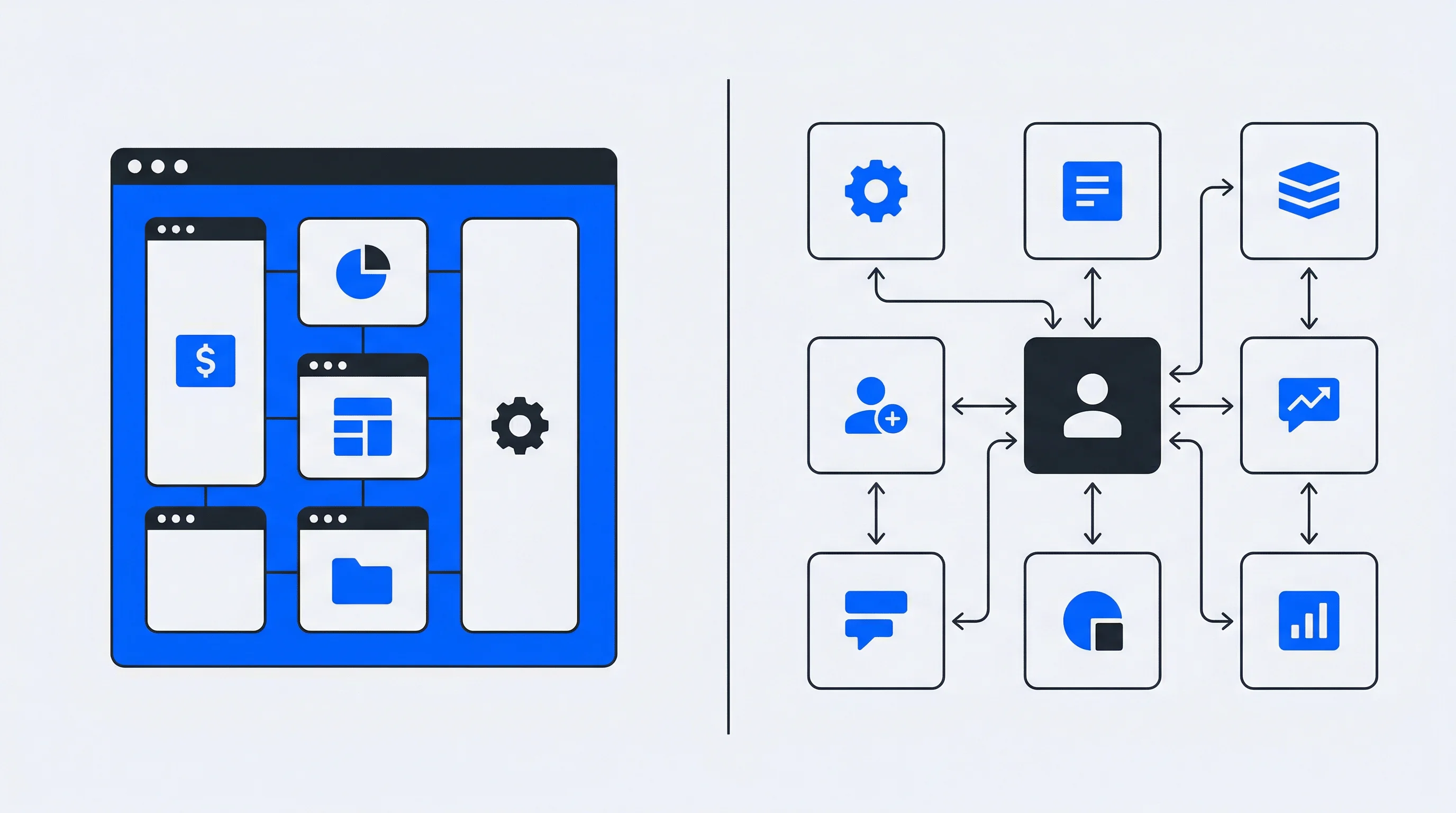
When you are looking for a software infrastructure that meets your company's needs, the terms "best of breed" and "monolithic" are used regularly. We therefore think it is useful to explain these terms in more detail, as it can be difficult to determine exactly what they mean and how they can work for your company.
Understanding Best-of-Breed Software
Best-of-breed software represents a strategic approach to building your technology stack by selecting the most effective solution for each specific business function. Rather than relying on a single vendor to provide all capabilities, this methodology focuses on identifying and integrating specialized tools that excel in their particular domains.
The core principle behind best-of-breed software is specialization. Each application is designed to solve specific problems exceptionally well, rather than attempting to be a jack-of-all-trades solution. For example, you might choose Salesforce for CRM, HubSpot for marketing automation, Slack for team communication, and a specialized identity management platform like Unidy for user authentication and data synchronization. Each of these tools represents the "best" option in its category, hence the term "best of breed."
This approach requires thoughtful integration planning, as these specialized tools must work together seamlessly. Modern best-of-breed solutions typically offer robust APIs, webhooks, and standardized protocols like OpenID Connect and SAML to ensure smooth data flow and unified user experiences across the entire technology ecosystem.
Monolithic vs. Best of Breed
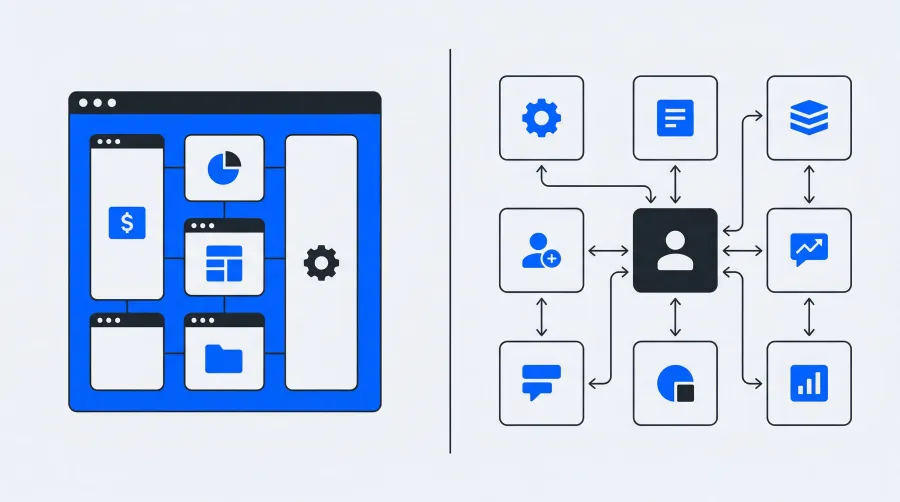
A monolithic solution is the idea that there is one suite of software that addresses all areas of the business. The entire organization would utilize different components of the suite created for their area of the business. The term "Best of Breed" refers to business software and stands for the philosophy of picking the best solution from each application area and integrating it into one's own IT infrastructure instead of relying on one monolithic software provider. Following this approach, companies use modules that are most efficient and/or best suited to their processes instead of holistic solutions from one single software provider.
Advantages of Best-of-Breed
- Specialized - The software modules are "real specialists" and are usually tailored to their particular needs, solving key problems for one particular department.
- Independent - Using best-practice software for particular use cases reduces infrastructure dependencies and enables teams to collect the exact data they need.
- Established - Teams often already work with proven software that perfectly fits their needs.
- Efficient - Firms can reduce agency dependencies and spare tech resources, as single software solutions are cheaper to purchase and can be operated by the individual departments.
- Individual - Every company and every department operates an individual solution, that can be connected to other tools via APIs. This creates a unique and individual infrastructure.
- Fast - Quick to learn, since at best only the interfaces are relearned.
Choosing the Right Architecture for Your Business
The decision between best-of-breed and monolithic architecture depends on several key factors specific to your organization's needs, resources, and growth objectives. Understanding when each approach makes sense can help you make the most effective choice for your digital infrastructure.
Choose best-of-breed when: your organization has diverse, specialized needs across different departments; you want to avoid vendor lock-in and maintain flexibility; you have existing tools that work well and need integration; your team has the technical capability to manage multiple integrations; and you prioritize getting the absolute best functionality in each area over simplicity.
Choose monolithic when: you prefer a single vendor relationship and unified support; your organization has straightforward, well-defined processes that align with standard software offerings; you have limited IT resources for managing multiple integrations; you value consistency in user interface and data handling across all functions; and initial setup speed is more important than specialized functionality.
For many organizations, a hybrid approach works best — using a monolithic solution for core business functions while integrating specialized best-of-breed tools for unique requirements. The key is ensuring that whatever approach you choose includes robust integration capabilities and clear data ownership, particularly around user identity and consent management.
Unidy: The Best-of-Breed Enabler
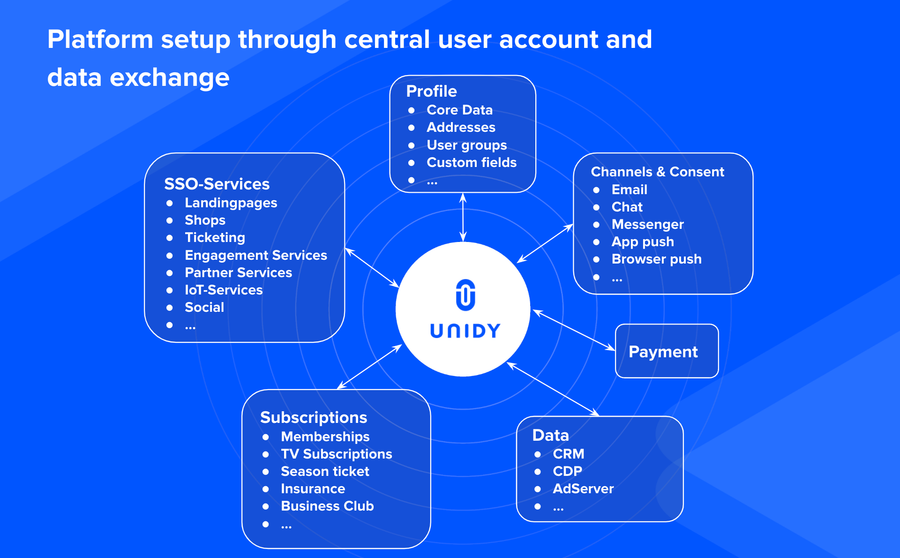
Unidy enables a best-of-breed setup that's connected through the central user account and our open User-API. All user data is synchronized throughout the whole best-of-breed platform. On the user side, this leads to a unified brand experience and full data control.
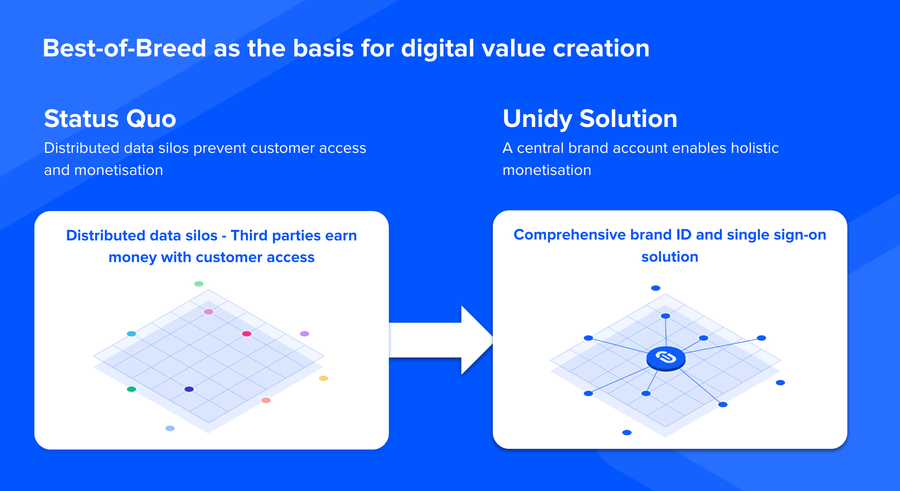
Unidy: Best-of-Breed as the Basis for Digital Value Creation
With the Unidy best-of-breed setup that's connected through the central user account, all user data is synchronized, making digital value creation possible.
If you want to set up your own best-of-breed platform with Unidy or want to learn more about it, feel free to contact us.
Authentication vs. Authorization: Key Differences
Learn the key differences between authentication and authorization in securing applications. Learn how these processes work together to protect sensitive data and improve cybersecurity with practical examples and best practices.
From Identity to Intelligence: How CIAM Powers AI Enablement
AI agents are already retrieving customer data, completing transactions, and personalizing experiences across digital services. The question is whether your identity infrastructure can tell the difference between a legitimate AI assistant acting on behalf of a user and an unauthorized system attempting to access sensitive information.